



Lost Crypto to a Scam? Do Not Pay Anyone Who Offers to Get It Back
Scammers may offer to recover your lost crypto for a fee. Learn the red flags and what the FTC and FBI say you can do.
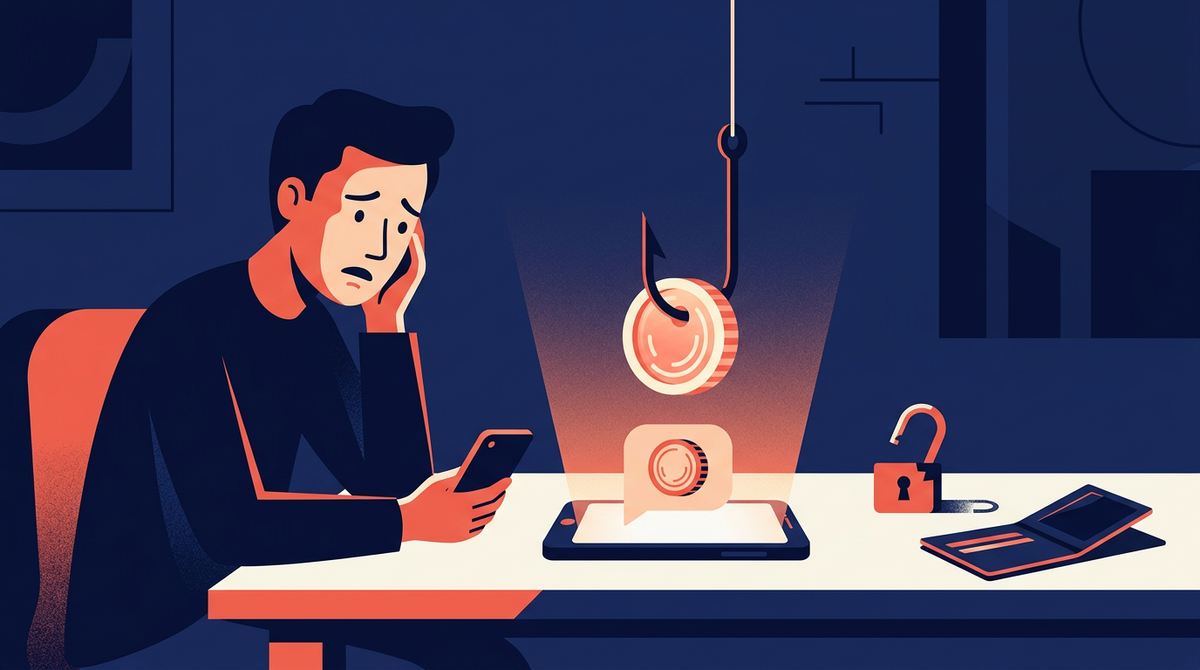
If you lost crypto to a scam, someone may contact you and say they can get it back. The U.S. Federal Trade Commission (FTC) and the FBI warn that scammers use recovery offers to target people who have already lost money. Here are the red flags and steps you can take.
Why a second message may find you
The FTC says refund and recovery scammers buy lists of people who have already been scammed. Its article calls this a "sucker list." A list can include a person's name, address, and phone number, the kind of scam that tricked them, and how much they paid. Scammers expect that someone who was scammed once is a good target again.
The FBI says something similar about crypto. On its cryptocurrency investment fraud page, the FBI says almost all victims are later contacted by scammers running recovery schemes.
The FTC says these messages can arrive by phone, email, text, social media, or letter.
What the scammer may say
- They claim to be someone official. The FTC says they may say they work for a government agency (even the FTC), a consumer group, or a law firm. The FBI adds law enforcement and private companies.
- They ask for a fee. The FTC lists a "retainer fee," "processing fee," "administrative charge," or "tax" as common names for the payment.
- They ask for your personal or bank details. The FTC says scammers may ask for these so they can "deposit" a refund. If you share them, your identity could be stolen.
- They say a fee is needed to unlock your account. The FBI says that if a fake investment site freezes your account and asks for "taxes" or "fees," that is a trap. Paying will not get your funds back.
Red flags to check
- Someone you did not contact brings up your loss first.
- They want money up front, in any amount, for help getting money back.
- They ask for your bank account, card, or Social Security number.
- They guarantee that you will get your money back. The FTC says government agencies and legitimate groups do not make that promise.
- They insist you pay with cash, gift cards, crypto, a wire transfer, or a payment app. The FTC says only scammers insist on those methods.
- They ask you to move the chat to a private messaging app. The FBI says it never does this.
What the FBI and FTC say they do not do
The FBI says it will never ask for money, move communications to private messaging apps, or ask for bank account details or personal identifying information. If the FBI tries to reach a possible victim of crypto investment fraud, it may use email and phone. If you do not answer, it says it will leave a voicemail with instructions on how to verify its identity.
The FTC says government agencies and legitimate organizations never ask for money or financial account numbers to help you get a refund. If someone says they are from an agency, the FTC says to look up the agency's contact information yourself. Do not use a number the caller gives you or the one on your caller ID.
The FTC also suggests searching the name of any group that contacts you, plus words like "complaint," "scam," or "review." It says you can check with your state attorney general, too.
Why crypto makes this harder
The FTC says crypto payments typically cannot be reversed. It says you can usually get your money back only if the person you paid sends it back. It also says crypto payments do not have the legal protections that credit and debit cards have.
That is the gap recovery scammers use. A stranger who promises to reverse a transfer for a fee is asking you to pay for something the FTC says is hard to do.
What to do now
- Stop sending money. The FBI says to stop sending money to the suspected criminals. Do not pay any new "fee" or "tax" to release funds.
- Contact the exchange or ATM operator you used. The FTC says to do this right away, say the transaction was fraudulent, and ask them to reverse it and refund your money. The FTC warns that getting money back can be hard, so treat this as a step worth trying, not a promise.
- Save the details. The FBI asks reporters to include the scammer's contact details, how they first reached you, and your messages with them. It also asks for the crypto addresses involved, the amount and type of crypto, the dates and times, and the transaction ID, also called the hash. Add any website addresses or apps the scammer told you to use, the exchanges you used, and a timeline.
- Report it. The FTC takes reports at ReportFraud.ftc.gov. The FBI takes reports through its Internet Crime Complaint Center (IC3). For crypto, the FTC's crypto page also lists the CFTC and the SEC. The FBI asks you not to tell the suspected criminals that the FBI is involved, because that could hurt an investigation.
- Protect your accounts. If you gave a scammer a password and can still log in, the FTC says to create a new strong password and turn on two-factor authentication. If you gave a scammer access to your computer or phone, the FTC says to update your security software, run a scan, change your passwords, and turn on two-factor authentication.
The FTC adds that some states have passed laws that might help crypto scam victims. It points readers to the National Conference of State Legislatures to search for laws in their state.
The FBI also advises against paying services that claim they can recover lost funds.
Sources
- FTC Consumer Alert, "Have you lost money to a scam? Watch for scammers who say they can help," Aug. 3, 2026
- FTC, "Refund and Recovery Scams"
- FTC, "What To Do if You Were Scammed"
- FTC, "What To Know About Cryptocurrency and Scams"
- FBI, "Cryptocurrency Investment Fraud"
Source: United States Federal Trade Commission, www.ftc.gov
Disclosure and Disclaimer: This article is informational editorial coverage based on the cited FTC and FBI pages as read on Nov. 14, 2026. Government pages can change, so check them for updates. The illustration is computer-generated and does not show a real event or person. CryptoWorkPro cannot confirm whether any specific recovery service is real, and nothing here promises that lost crypto can be recovered. For help with a specific loss, contact your exchange, law enforcement, or a qualified professional. This article is not financial, legal, or investment advice. AI-assisted research and original article writing, links back to sources for proper attribution. Cited sources, not AI alone, support article writing and factual claims.