
What Do You Own When You Open a Digital Trading-Card Pack? What Collector Crypt's Terms Say
Collector Crypt reported a record day of NFT card-pack sales. Here is what its own terms say a buyer owns, and what is unclear.
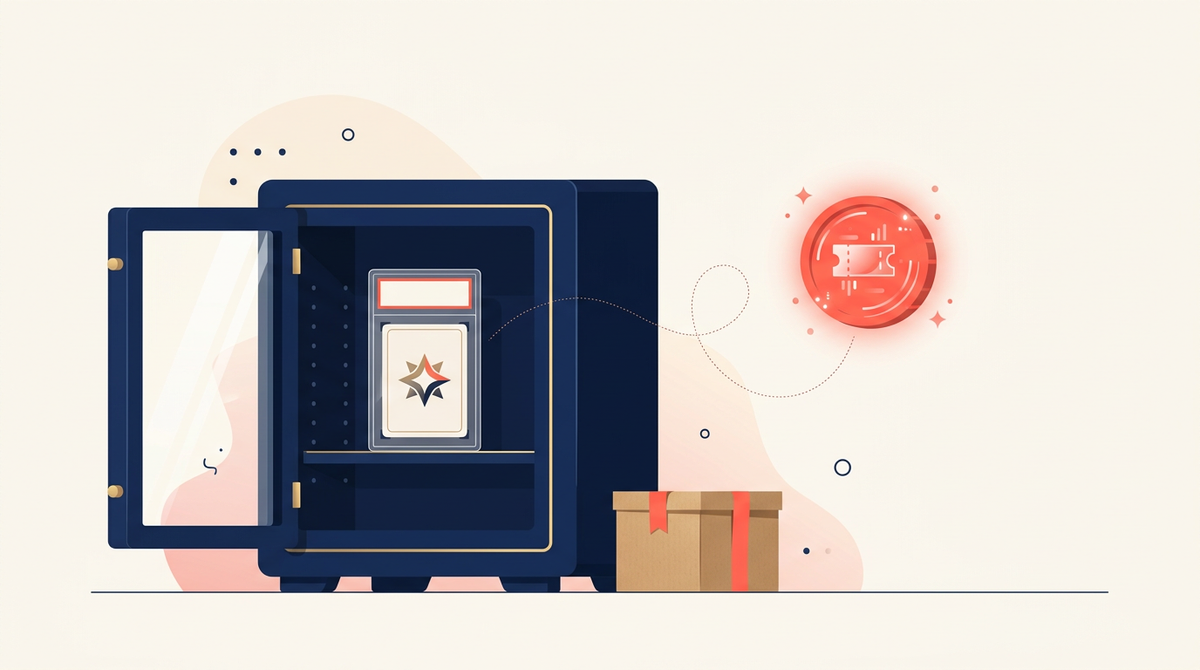
Collector Crypt sells randomized card packs on Solana. Its product documentation says a buyer pays $50 or $250 in USDC for a random on-chain Pokémon card. That card is an NFT tied to a physical card held in a vault. In October 2026, the company posted that it had a record day of pack sales.
The sales numbers are the headline. The more useful question is what a buyer actually owns. This article walks through what the company's own Terms of Service and documents say, and where those documents do not line up.
What the company reported
On Oct. 20, 2026, Collector Crypt posted on X: "Our biggest day yet: $24.3M in gross revenue in 24 hours." The post also said 123,425 packs had been opened, "and counting." It did not say how the company defines gross revenue or which 24 hours it counted. Gross revenue is money taken in, not profit.
These are the company's own figures. We did not find an audit or an independent count of them.
What the NFT represents
According to the Terms of Service, last revised June 9, 2026:
- Each NFT represents an ownership right to a physical item, which the terms call an "Asset." A third-party "Vault" holds it. The company says an NFT's market value may not match the value of the card.
- The NFT is the sole sign of that ownership. If you transfer it, sell it or lose control of it, you lose all rights to the card.
- You are the sole custodian of the NFT. If you lose access to the NFT or the wallet that holds it, the company says it will not give you access to the card.
- To get the physical card, you redeem it, which "burns" the NFT. The terms say the company cannot undo a burn. You pay shipping, withdrawal fees and sales tax.
- Each vault sets its own rules for storing and authenticating cards. The company says it does not control those practices or provide custody itself. The terms also say owning an NFT does not let you contact the vault directly.
What the terms say about selling
The terms say the company does not itself provide a secondary market, card trading, instant buyback or automated liquidation. They say independent third-party liquidity providers do that. The same terms also say you may resell an NFT on the company's website or on outside marketplaces, and that a fee set by the company can be taken from outside sales.
The company's product documentation reads differently. It describes a marketplace with "2% royalties + the marketplace fee." It also says a pack buyer can keep a card or sell it back "to us on the spot for 85% of its insured value." The developer documentation adds that a sell-back must happen within 72 hours of the card being sent to the buyer.
The documentation we read carries no date. We could not confirm from public documents which description applies in every case, so check both before you buy.
Collectibles, not investments
The terms say the NFTs serve "exclusively as collectibles and as access tokens permitting certain redemption rights." They say the NFTs have no independent or inherent monetary value, and that users agree not to use the service for investment purposes. Purchases are final. The company says it can block rights tied to an NFT if a user violates the terms or it is told of fraud.
The terms also describe random-draw features as offered with no purchase necessary, with a free alternative way to enter. They say official sweepstakes rules govern those features. Where the terms point to those rules, the text reads "content coming soon." We could not read the rules.
The company's developer documentation also describes an optional "turbo" setting that automatically sells common-tier wins back for USDC. Read how any auto-sell setting works, and what it pays, before turning it on.
Questions to ask before you open a pack
- Who is the buyer if I want to sell, and at what price?
- What fees apply if I redeem the card, and who pays them?
- What happens if I lose my wallet? The terms say the company will not give access to the card if you lose control of the NFT or the wallet.
- Can I read the rules for random draws and sweepstakes?
- Am I treating this as a collectible, as the terms do, or as something I expect to sell for more?
What is still unknown
- Which buyback terms apply, given the gap between the Terms of Service and the product documents.
- The full official sweepstakes rules.
- How the company counts gross revenue and which 24 hours its record-day figures cover.
Sources
- Collector Crypt: Terms of Service
- Collector Crypt: Product information
- Collector Crypt: Gacha API documentation
- Collector Crypt on X: record-day post, Oct. 20, 2026
Disclosure: The featured image is an AI-generated illustration, not a photo of any real vault or card. We could not read the official sweepstakes rules, and the company's documents conflict on buybacks, so those points are stated as unresolved. Sales and pack figures come from the company's own post, and we found no audit of them. This article is not financial, legal, or investment advice. AI-assisted research and writing. Cited sources, not AI alone, support the claims.