

An Exchange Says It Is Registered With FinCEN. What Does That Prove?
FinCEN says its list is not an endorsement. See what "registered" shows, how to search it, and what it cannot tell you about an exchange.
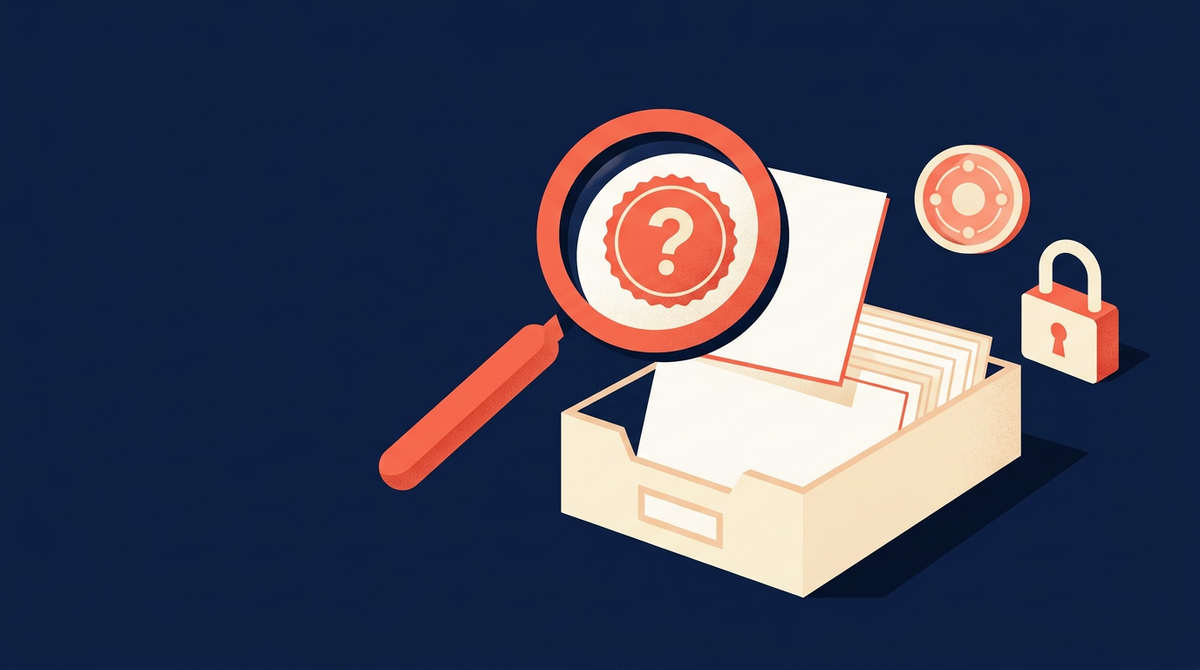
You open a new crypto app. The footer says, "Registered with FinCEN." It is easy to read that as "a regulator checked this company and found it safe."
FinCEN, the U.S. Treasury's Financial Crimes Enforcement Network, says that is the wrong reading. Its public list of registered companies is "not a recommendation, certification of legitimacy, or endorsement of the business by any government agency."
This guide explains what registration does show, how to search the list, and what you still need to check yourself.
What "registered with FinCEN" means
U.S. rules put many crypto exchanges in a group called money services businesses, or MSBs. A money transmitter is one kind of MSB.
FinCEN's May 9, 2019 guidance says a person who accepts and sends crypto that acts as a substitute for currency is a money transmitter. It says exchangers generally fit that description. It also says the answer depends on the facts of each business.
Money transmitters must register with FinCEN. They must also keep an anti-money-laundering program, keep records, and report suspicious activity. The guidance says this applies to companies based outside the U.S. that do business "in whole or in substantial part" in the U.S., even if they have no U.S. office.
Registration itself is a filing. The company fills out FinCEN Form 107. Under FinCEN's registration page, the first filing is due within 180 days after the business starts, and the registration is renewed every two years.
What FinCEN says the list is not
FinCEN's MSB Registrant Search page is direct about this:
- FinCEN "does not approve or endorse any business that has registered as an MSB."
- Any claim that FinCEN approved or endorsed a business "is false and may be part of a scam."
- Fraudsters tell people it is safe to send money or invest because a company appears on the list. FinCEN says not to trust a company only for that reason.
- The information on the list "reflects only what the registrant has provided to FinCEN."
In plain terms, a listing shows that a company filed paperwork. It does not show that FinCEN looked into the company and cleared it.
How to check an exchange, step by step
- Find the legal name. Look in the terms of use or legal notice, not just the app name. If the company shows a registration number, write it down.
- Open the search. You can search by registration number, legal name, or "doing business as" name. FinCEN says the best results come from the registration number.
- Type the name exactly. FinCEN says the search must match what the company filed. A different spelling or abbreviation can return no result. If you get none, try again with the state or ZIP code.
- Compare what you find. Check that the name and address match the company's own legal pages.
As of its Nov. 10, 2026 update, the list showed 29,526 registered MSBs. FinCEN updates it weekly. The search form's activity choices include "money transmitter," but none is specific to crypto. You cannot filter the list down to exchanges.
If you do not find the company
A missing name is a reason to ask questions. It is not proof of fraud.
- FinCEN says not every company with a current registration is listed. It can remove a company from the list for reasons that include giving false information, claiming FinCEN approval, or being the subject of an adverse finding by an authority.
- Companies that did not renew are not on the list.
- Some companies are not MSBs. According to the 2019 guidance, the MSB definition leaves out banks. It also leaves out people registered with, and regulated or examined by, the SEC or the CFTC.
Ask the company which U.S. rules it follows and who regulates it. A real business should be able to answer in plain words. Do not move money until it does.
Federal registration and state licenses are separate
The federal rule, 31 CFR 1022.380, says each MSB must register with FinCEN "whether or not licensed as a money services business by any State." That wording shows registration and state licensing are two different things.
This guide does not cover state rules. If you want to know whether a company holds a license where you live, ask your state's financial regulator.
What registration does not tell you
A FinCEN listing says nothing about these questions:
- Does the company hold the crypto it says it holds? See Proof of Reserves Is a Snapshot, Not an Audit or Safety Certificate.
- Is your money insured? The Federal Trade Commission says crypto held in an account is not insured by the government the way dollars in an FDIC-insured bank account are. If the company goes out of business or is hacked, the FTC says the government has no duty to step in. See Crypto on Coinbase Is Not FDIC Insured.
- Will withdrawals work? A fake app can show a balance and then block you. See Fake Crypto Trading Apps Lock Withdrawals and Demand Taxes or Fees.
Rules outside the U.S. work differently. For the EU, see The App Still Works After MiCA's Deadline.
Other checks the FTC recommends
The FTC's crypto scam guide (dated May 2022) adds a few simple tests:
- Only scammers guarantee profits or big returns.
- Be wary of anyone demanding crypto to protect your money or unlock a withdrawal.
- Search the company name with words like "review," "scam," or "complaint."
- Be wary of any "investment manager" who contacts you first and asks you to move crypto into their account.
If something looks wrong
The FTC lists these places to report crypto fraud:
- The FTC, at ReportFraud.ftc.gov
- The CFTC, at CFTC.gov/complaint
- The SEC, at sec.gov/tcr
- The FBI's Internet Crime Complaint Center, at ic3.gov
- The crypto exchange you used to send the money
If someone uses FinCEN's name or says FinCEN approved their business, FinCEN asks you to report it to the Treasury Inspector General and the FTC.
What this guide does not say
This guide does not say whether any named exchange is or is not registered. The list changes every week, so search it on the day you need it. A registration is one piece of evidence about a company, and it is a small one.
Sources
- FinCEN: MSB Registrant Search
- FinCEN: Money Services Business (MSB) Registration
- FinCEN Guidance FIN-2019-G001 (May 9, 2019)
- eCFR: 31 CFR 1022.380, Registration of money services businesses
- FTC Consumer Advice: What To Know About Cryptocurrency and Scams
Disclosure and Disclaimer: This article is informational coverage based on U.S. government pages checked on Nov. 12, 2026. FinCEN's list, rules, and guidance can change, and a listing or a missing listing does not show that a company is safe, legal, or unsafe. State licensing, rules outside the U.S., and the rules for any one company were not reviewed. The illustration is AI-generated and is not a photograph of a real event. For questions about a specific company, contact your state financial regulator or a qualified professional. This article is not financial, legal, or investment advice. AI-assisted research and original article writing, links back to sources for proper attribution. Cited sources, not AI alone, support article writing and factual claims.