



How to Read a Stablecoin Reserve Report: What U.S. Law Says Issuers Must Show
A plain guide to stablecoin reserve reports: what U.S. law lists as allowed reserves, what monthly reports must show, and who checks them.
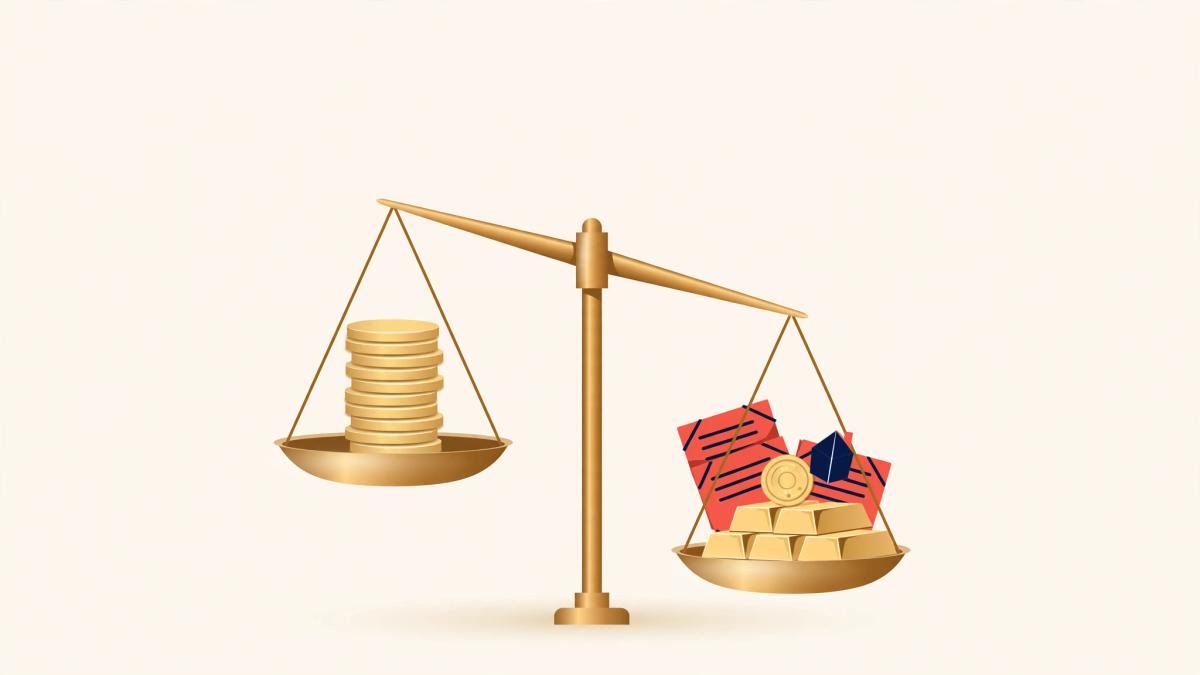
A stablecoin is a token that aims to hold a steady value, usually one U.S. dollar. Its issuer says it keeps assets in reserve so holders can turn tokens back into dollars. A reserve report is where that promise is shown in numbers. This guide explains what U.S. law says those reports must cover, who checks them, and what to look for when you read one.
The rules below come from the GENIUS Act, a federal law signed on July 18, 2025. It sets standards for "permitted payment stablecoin issuers," which are issuers formed in the United States and approved under the Act. The law provides an effective date based on the timing of regulations, as explained below. This guide uses the law's own text and names no specific coin or company.
What the law lets an issuer hold as reserves
The Act says a permitted issuer must keep identifiable reserves behind its outstanding payment stablecoins on an at least 1 to 1 basis. For a token designed to be redeemed for one U.S. dollar, that means at least one dollar of eligible reserves per outstanding token. The law lists what counts:
- Cash: U.S. coins and currency, or money held in an account at a Federal Reserve Bank.
- Bank deposits: demand deposits, which can be withdrawn at any time, or insured shares at an insured bank or credit union. The FDIC and the National Credit Union Administration may set limits.
- Short-term U.S. Treasuries: Treasury bills, notes or bonds that have 93 days or less left before they mature, or were issued with a maturity of 93 days or less.
- Overnight repurchase agreements: cash the issuer receives by selling securities with a promise to buy them back, with an overnight term and backed by Treasury bills of 93 days or less.
- Overnight reverse repurchase agreements: cash the issuer lends overnight and secures with Treasury collateral. The law adds conditions: the deal must be tri-party, centrally cleared through an SEC-registered clearing agency, or made with a counterparty the issuer judges creditworthy even under severe market stress.
- Government money market funds: registered funds that invest only in the assets above.
- Other federal government assets: similarly liquid assets issued by the federal government and approved by the issuer's main regulator.
- Tokenized versions: digital-token forms of several of these reserve types, as long as they follow all applicable laws.
The list does not name stocks, corporate bonds, loans, gold or crypto assets. When you read a report, compare its asset groups with this list. A group that does not match is a question to ask, not proof of a problem. The report may cover a coin that is not issued under this law, or one that is still moving toward it.
What a monthly reserve report must show
The Act requires an issuer to publish its reserve makeup every month on its own website. That report must include:
- The total number of payment stablecoins the issuer has outstanding.
- The amount and makeup of its reserves.
- For each category of reserve, the average tenor and the geographic location of custody.
Tenor is the time left before an asset matures. A reserve full of assets that mature within days is easier to turn into cash than one with longer terms. Custody location tells you where the assets are held.
Issuers must also publish their redemption policy. It has to explain clear steps for timely redemption and list all fees for buying or redeeming tokens in plain language. The law says those fees can change only with at least 7 days' notice to consumers.
Who checks the numbers
The law sets up several layers of review.
- A monthly examination. Each month, a registered public accounting firm must examine the information in the previous month-end report.
- An executive certification. Each month, the issuer's chief executive officer and chief financial officer must certify to the issuer's regulator that the monthly report is accurate. Knowingly submitting a false certification carries the criminal penalties in section 1350(c) of title 18 of the U.S. Code.
- An annual audit for large issuers. An issuer with more than $50 billion in total outstanding issuance, and not already filing reports under the federal securities laws, must prepare annual financial statements under generally accepted accounting principles and have a registered public accounting firm audit them under Public Company Accounting Oversight Board standards. The issuer must post the audited statements on its website and send them to its federal regulator each year.
The law uses the word "examined" for the monthly report and "audit" for the yearly statements. They are different jobs. A narrow examination looks at the specific information in one report. A full audit covers an entire set of financial statements. When you see an accountant's letter, read what it says it covered, which date it covers and what it leaves out.
Other rules that affect reserves
- Limits on reuse. Required reserves cannot be pledged or reused by the issuer, with narrow exceptions. These include meeting margin obligations on certain repurchase deals, paying for standard custody services, and raising cash for expected redemptions through short Treasury bill repurchase agreements that are cleared through an SEC-registered clearing agency or approved in advance by a regulator.
- No interest from the issuer. An issuer may not pay holders interest or yield solely for holding, using or keeping a payment stablecoin.
- Holders come first in insolvency. If a permitted issuer goes through an insolvency proceeding, people holding its stablecoins have priority over the issuer and other claimants with respect to the required reserves. They share that priority on a ratable basis, meaning in proportion to their holdings.
- No government-backed look. Issuers may not use terms like "United States" or "USG" in a coin's name, or market a coin so a reasonable person would think the U.S. government issued, approved or guarantees it.
Foreign issuers and timing
The Act provides an exception to its issuance and sales restrictions for foreign issuers that meet its conditions. These include a Treasury Department finding that their home regulatory regime is comparable to the U.S. one, registration with the Comptroller of the Currency, and reserves in a U.S. financial institution sufficient to meet the liquidity demands of U.S. customers. A reciprocal arrangement can change that last condition.
The Act takes effect on the earlier of two dates: 18 months after it became law, which is Jan. 18, 2027, or 120 days after the primary federal stablecoin regulators issue any final regulations implementing it. Separately, the law bars digital asset service providers from offering or selling a payment stablecoin to people in the United States unless a permitted issuer issued it, starting 3 years after enactment, which is July 18, 2028. There are exceptions, including the foreign-issuer path above. Check regulators' announcements for current rules and implementation details.
Seven questions to ask about any reserve report
- What date does it cover? A report is a snapshot. Note how old it is.
- Who prepared it, and who checked it? Look for the name of the accounting firm and the type of work it did.
- What did the checker cover and exclude? Read the limits, not just the headline conclusion.
- What are the assets? Compare each group with the list above and with the report's own labels.
- How long until the assets mature, and where are they held? Look for average tenor and custody location.
- How do reserves compare with tokens outstanding? Both numbers should be on the same date.
- What are the redemption terms and fees? Check who can redeem directly and what it costs.
Then compare the next report with this one. Changes in date, asset mix and checker's limits tell you more than a single snapshot.
What this guide can and cannot tell you
The Act describes what issuers under it must do. It does not tell you how any specific coin is run today, and it does not rate any coin. A report that follows the format is not a guarantee of safety, price or redemption. Rules from regulators may add detail or change how these requirements work in practice.
Source
Every legal requirement above comes from one source, the full text of the law. It is a work of the U.S. government.
Disclosure: This guide explains what one federal law says about stablecoin reserves, reports and outside checks, using the law's published text. It does not rate any stablecoin or issuer, and it makes no promise about safety, price or redemption. Rules and dates may change as regulators act, so check official announcements. The illustration is a concept image, not a photo of a real event. This article is not financial, legal, or investment advice. AI-assisted research and writing. Cited sources, not AI alone, support the claims.