

DOJ Says It Has Restrained $1 Billion in Scam Crypto. It Has Not Said How Much Went Back to Victims.
The U.S. Attorney's Office for the District of Columbia says its Scam Center Strike Force has "restrained" $1,006,460,156.82 in cryptocurrency tied to fraud ...
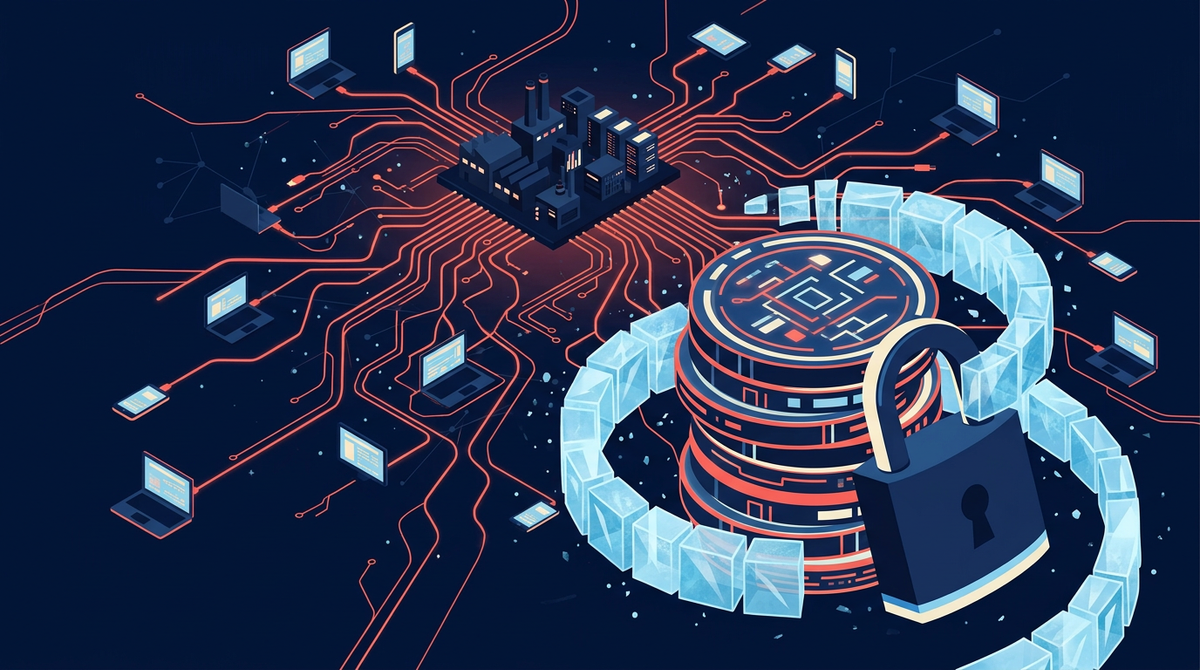
The U.S. Attorney's Office for the District of Columbia says its Scam Center Strike Force has "restrained" $1,006,460,156.82 in cryptocurrency tied to fraud and scams. The releases we reviewed do not say how much of that money has gone back to victims.
What the Justice Department said
In an Oct. 27, 2026 press release, the office said the Strike Force has restrained about $1 billion in crypto-related fraud funds. The release was updated on Oct. 29.
The same release made several other claims. These are the office's own figures:
- The Strike Force has seized 700 fraudulent crypto investment websites.
- Thousands of Starlink terminals have been taken down.
- Meta reports that 17.3 million scam accounts were removed from its platforms.
The Strike Force page, last updated on Nov. 6, 2026, repeats the $1,006,460,156.82 figure. It says the team is "focused on recovering stolen funds and returning them to victims."
Words that mean different things
DOJ has used different words for its running totals over the past year. That matters, because these words can describe different stages.
- February 2026: a release said "freezes and seizures" topped $580 million. It described the work as "freezing, seizing, and forfeiting." It also said DOJ "will seek to forfeit these funds and return them to victims to the maximum extent possible."
- July 2026: a release announced five civil forfeiture complaints seeking more than $25 million. It also cited "more than $800 million recovered."
- October 2026: the headline total became "restrained," at $1,006,460,156.82.
In everyday terms, a frozen or restrained account is held in place so the money cannot move. Forfeiture is the court process that can later take ownership of it. Money returned to a victim is a separate, later step. We are using DOJ's own words here and are not giving legal definitions.
The releases do not explain whether the totals from different months count the same things in the same way. An April 23 release, for example, described more than $700 million as restrained "through voluntary actions of cryptocurrency providers, as well as U.S. legal process." The different terms do not establish that the totals can be compared directly as one growing number. None of the releases we reviewed gives a dollar figure for money returned to victims.
The alleged wallet scam in the Oct. 27 release
The release also announced charges against six people based in Africa, with connections to Southeast Asia and China. According to affidavits cited by DOJ, they are accused of running a fake NFT investment scheme through dating sites. These are allegations. The defendants are presumed innocent unless proven guilty in court.
The release says the affidavits allege that a criminal group opened scam compounds in Madagascar in early 2025. They allege victims were told to connect their crypto wallets to fraudulent sites. The defendants allegedly then moved money out of those wallets without the victims knowing.
DOJ says FBI investigators identified about 74 wallets tied to about 800 U.S. victims who reported losses. DOJ names Chui Kok Wa as the alleged leader and says Wa is charged with conspiracy to commit wire fraud. U.S. Attorney Jeanine Pirro called on Madagascar to extradite the six defendants.
A separate action in West Africa
On Oct. 13, 2026, DOJ announced results from a "Joint Disruption Week" in West Africa. It reported 28 arrests by international law enforcement. It said private companies reported removing more than 3.7 million accounts, Pages and Groups, and that private partners identified at least $11 million in "potentially freezable" funds.
"Potentially freezable" is not the same as frozen or seized. The release does not say how much of that money was actually held.
What readers can do
DOJ's Strike Force page gives these steps for victims of Southeast Asian scam-center schemes:
- File a report at the FBI's Internet Crime Complaint Center, ic3.gov.
- Email USADC-SCSF.Tips@usa.doj.gov and include your IC3 case number.
The July release also told victims to contact their local Secret Service field office and file at ic3.gov.
These habits are our own general advice, not DOJ's:
- Do not connect a wallet to an "investment" site that someone you met online sends you.
- Be careful with anyone who moves a new chat from a dating app to a crypto "opportunity."
- Keep records: screenshots, wallet addresses and transaction links help investigators.
What we still do not know
- How much of the restrained money has been returned to victims.
- How a victim proves a claim to restrained funds, and how long it takes.
- How much of the $1 billion has moved from restrained to forfeited.
- Whether DOJ's totals from different months count the same things.
We will update this story if DOJ publishes those numbers.
Sources
- U.S. Attorney's Office, District of Columbia: Scam Center Strike Force Expands Reach to Target Global Crime Syndicates; Charges Scammers Based in Africa and Tied to China (Oct. 27, 2026)
- U.S. Attorney's Office, District of Columbia: Scam Center Strike Force page (updated Nov. 6, 2026)
- U.S. Attorney's Office, District of Columbia: Department of Justice Announces Results of Law Enforcement and Private Industry Joint Disruption Week Targeting Online Scam Accounts and Transnational Criminal Networks Operating in West Africa (Oct. 13, 2026)
- U.S. Attorney's Office, District of Columbia: Investigations into Cryptocurrency Scams Result in Seizure of More Than $25 Million (July 21, 2026)
- U.S. Attorney's Office, District of Columbia: Scam Center Strike Force Takes Major Actions Against Southeast Asian Scam Centers Targeting Americans (Apr. 23, 2026)
- U.S. Attorney's Office, District of Columbia: D.C. Scam Center Strike Force Seizures of Cryptocurrency from Chinese Transnational Criminals Tops $580 Million (Feb. 26, 2026)
Disclosure: This story reports figures and allegations from U.S. Department of Justice releases. The charges are allegations, and DOJ's totals use different terms. We did not independently audit them or confirm that they can be compared. We did not verify how much money has been returned to victims. The featured image is a generated illustration, not a photo of any real event. This article is not financial, legal, or investment advice. AI-assisted research and writing. Cited sources, not AI alone, support the claims.