



Circle Earned $658 Million on USDC Reserves. Does Any of It Reach USDC Holders?
Circle, the company that issues the USDC stablecoin, reported its third-quarter results on Nov. 4, 2026. The report shows how a stablecoin issuer makes money...
Circle, the company that issues the USDC stablecoin, reported its third-quarter results on Nov. 4, 2026. The report shows how a stablecoin issuer makes money, and the answer is mostly interest. This article explains the main numbers and answers a question many holders ask: does any of that money reach me?
USDC is a digital token that Circle says it will redeem for one U.S. dollar. Circle holds reserves to back it. Its transparency page lists bank deposits and short-term U.S. government debt. When Circle earns interest on those reserves, it reports that as "reserve income."
The main numbers
Circle labels these figures unaudited, which means they have not been through a full outside audit. They cover the three months that ended Sept. 30, 2026, and the changes compare them with the same quarter a year earlier.
- Reserve income: $657.6 million, down 8%. This is interest earned on the money backing USDC.
- Average USDC in circulation: $73.3 billion, up 8%. This is the average amount of USDC outstanding during the quarter.
- Reserve return rate: 3.5%, down 0.61 percentage points. Circle's release calls this a drop of 61 basis points.
- Distribution and transaction costs: $409.2 million. Circle lists these as costs against its revenue.
- Total revenue and reserve income: $864.9 million, up 17%.
- Net income from continuing operations: $226.0 million, up 5%.
Why reserve income fell
Two things moved in opposite directions. On average, more USDC was outstanding, which raises income. But each dollar of reserves earned less. Circle's release says the lower return rate was the main reason reserve income fell. It does not say what caused the rate to drop.
So an issuer's income can change even when use of the coin does not. Circle's own risk list says that changes in interest rates could affect its results.
Where the money went
Circle's total of distribution, transaction, and other costs was $411.6 million, down 8%. Circle says that was mostly from lower distribution payments. The release does not list who received those payments.
The "net reserve margin" works from a narrower figure than that $411.6 million total. In the table of its earnings release PDF, Circle defines net reserve margin as reserve income minus distribution and transaction costs only, divided by reserve income. Those costs are the $409.2 million listed above, and the table reports a margin of 38%. By our math, $409.2 million is about 62% of the $657.6 million in reserve income. That leaves about 38%, which matches Circle's figure. This is before Circle pays for staff, technology, and its other operating expenses.
Revenue grew 17%, but one item drove it
Circle's "other revenue" rose to $207.3 million. The release says the rise came from the ARC token presale, which brought in $182 million. ARC is the token of Arc, a blockchain Circle launched on Sept. 16. This article does not cover the token or its terms.
By our math, taking out that $182 million leaves about $683 million in total revenue and reserve income. That is roughly 8% below the $740 million of a year earlier. Circle rounds the $182 million figure, so our result is approximate.
Does any of this reach USDC holders?
Circle's release does not describe any payment of reserve income to people who hold USDC. In the release, reserve income is Circle's own revenue.
The GENIUS Act, the 2025 U.S. stablecoin law, speaks to this. Section 4(a)(11) says a permitted or foreign payment stablecoin issuer may not pay a holder "any form of interest or yield" solely in connection with holding, using, or retaining the stablecoin. The law takes effect no later than Jan. 18, 2027. Our earlier articles explain what the GENIUS Act means for stablecoin holders and what the OCC's final rule covers.
Some platforms run their own rewards on USDC. On Nov. 6, 2026, Coinbase's USDC page said USDC rewards are exclusively available to Coinbase One members. Coinbase One is a paid monthly membership, and the page said plans start at $4.99/month. The page listed a 3.75% rewards rate for members, with availability subject to location and terms. Those rewards come from the platform's program. Circle's release does not say how any platform pays for rewards. Rates and rules are set by each platform and can change.
Holding USDC in a wallet you control is a different setup. Nothing in Circle's release says wallet holders are paid.
What is happening to USDC supply
Circle's release puts USDC in circulation at $73.9 billion on Sept. 30, unchanged from a year earlier. Circle's transparency page, which updates over time, showed $69.8 billion in circulation as of Nov. 2, 2026, and $71.0 billion in total reserves. The same page showed that over the previous 30 days, Circle issued $48.0 billion of USDC and $51.0 billion was redeemed. That is a net drop of $3.1 billion.
Those numbers come from two places and two dates. Neither explains why more USDC was redeemed than issued. Circle also says a Big Four accounting firm checks each month that USDC reserves are worth more than the USDC in circulation. The latest monthly report linked on that page covers September.
What is still unknown
- Who received Circle's distribution payments, and how much each received.
- Why USDC circulation fell in the 30 days before Nov. 2. Circle's pages give no reason.
- How interest rates will move next, and what that will do to Circle's reserve income.
What you can check yourself
- Circle's transparency page for current circulation, reserves, and the monthly reports.
- The terms of any rewards program on the platform where you hold USDC, including who is eligible and whether the rate can change.
Where the numbers come from
The third-quarter figures come from Circle's own unaudited release, and CryptoWorkPro has not verified them independently. The percentages and the revenue figure without the ARC presale are our own math and are labeled that way. The circulation and reserve figures on the transparency page were checked on Nov. 6, 2026, and they change over time.
- Circle, "Circle Reports Third Quarter 2026 Results," Nov. 4, 2026
- Circle's Q3 2026 earnings release (PDF with full tables)
- Circle's transparency and reserves page (data as of Nov. 2, 2026)
- GENIUS Act, Public Law 119-27, Sections 4(a)(11) and 20
- Coinbase's USDC page, checked Nov. 6, 2026
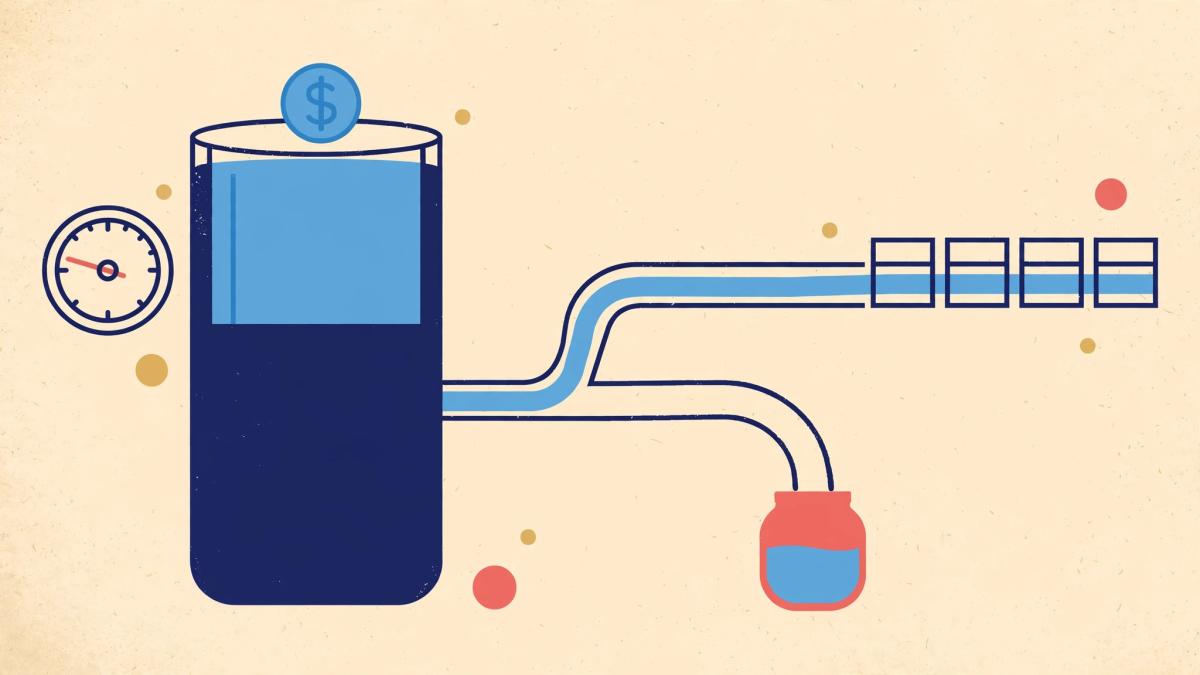
Disclosure: This article explains figures Circle reported in its own unaudited release on Nov. 4, 2026, and data on Circle's transparency page as of Nov. 2, 2026. It does not review Circle's stock or the ARC token, and it recommends no product or rewards program. Reward terms are set by each platform, so check the provider's current rules. The illustration is a concept image, not a photo of a real event. This article is not financial, legal, or investment advice. AI-assisted research and writing. Cited sources, not AI alone, support the claims.