

A Tiny Bitcoin Amount Just Appeared in Your Wallet. Leave It Alone.
A tiny unsolicited Bitcoin amount does not give anyone your keys. Ignore dust, use a new address, and never share a recovery phrase.
A Tiny Bitcoin Amount Just Appeared in Your Wallet. Leave It Alone.
A small unsolicited Bitcoin deposit does not give anyone control of your coins. Wallet documentation describes this pattern as dusting, a tracking tactic, not a theft of keys.
What you are seeing
You open a Bitcoin wallet and notice a tiny amount you did not request. Ledger's support article "Protecting yourself from a dusting attack," last updated May 13, 2026, says scammers send small amounts of cryptocurrency, called dust, to a large number of wallet addresses.
Ledger defines dust as tiny amounts of coins or tokens. For Bitcoin, the smallest unit is 1 satoshi, which is 0.00000001 BTC. Dust can be a few hundred satoshis, amounts small enough to overlook.
The article says the main goal is to track those transactions, potentially deanonymize wallet owners, and later target them with phishing. Dust in the wallet does not give anyone control over your funds.
Why Bitcoin makes this possible
Bitcoin.org's "Protect your privacy" page states that Bitcoin is highly transparent. All Bitcoin transactions are public, traceable, and permanently stored. Addresses are created privately, but once used they carry the history of every transaction they touch. Anyone can see the balance and transactions of any address.
Bitcoin.org says addresses should be used only once, and that you should use a new Bitcoin address each time you receive a new payment. That habit makes it harder to link payments together.
A UTXO is an unspent piece of bitcoin that a wallet can combine when you send. Ledger says dusting attacks target UTXO-based accounts such as Bitcoin, because later spending can reveal which coins sit in the same wallet.
Dusting is not the same as address poisoning
Ledger separates two tactics that both start with an unsolicited transaction.
Dusting, in Ledger's account, aims at privacy. Attackers watch how dust moves so they can cluster addresses and later send phishing.
Address poisoning aims at a sending mistake. The attacker wants you to copy a lookalike address from recent history and send real funds to the wrong place. Ledger's dusting page says that method can target any account, not only Bitcoin.
The practical overlap is simple. Do not spend unexpected tiny amounts, and do not copy a recipient address from recent history.
What the record says to do
Ledger's May 13, 2026 page says:
- Ignore unsolicited small transactions sent to your wallet.
- Do not interact with links or messages in memo tags or unsolicited transactions.
- Use a new receiving address for each transaction, especially on Bitcoin.
- Never share your 24-word recovery phrase. Ledger says it will never ask for it.
Bitcoin.org's privacy page independently supports the new-address habit. Bitcoin Core software treats some tiny outputs as dust under a relay policy, not a consensus rule. That policy is described in Bitcoin Core's policy.h source file. Nodes can set different cutoffs, so there is no single network-wide satoshi amount that defines dust for every wallet.
What remains unknown
A specific tiny deposit in your wallet may be dusting, a test payment, or something else. Public records do not identify who sent it or why.
Ledger describes later phishing as a possible follow-on, not a guaranteed next step. Bitcoin Core's dust threshold depends on output type and the node's configured dust relay fee. CryptoWorkPro has not measured any current dusting campaign.
What to watch next
Leave unexpected tiny Bitcoin amounts unspent. Generate a new receiving address for the next payment you expect. When you send, confirm the full destination address from a trusted source, not from a recent surprise deposit.
If a message asks you to claim dust, follow a link, or share a recovery phrase, stop. Check Ledger's dusting article and Bitcoin.org's privacy page for any later updates to that guidance.
Sources
- Ledger Support, Protecting yourself from a dusting attack, last updated May 13, 2026: https://support.ledger.com/article/protecting-yourself-from-dusting-attack
- Bitcoin.org, Protect your privacy: https://bitcoin.org/en/protect-your-privacy
- Bitcoin Core, policy.h (dust relay policy): https://github.com/bitcoin/bitcoin/blob/master/src/policy/policy.h
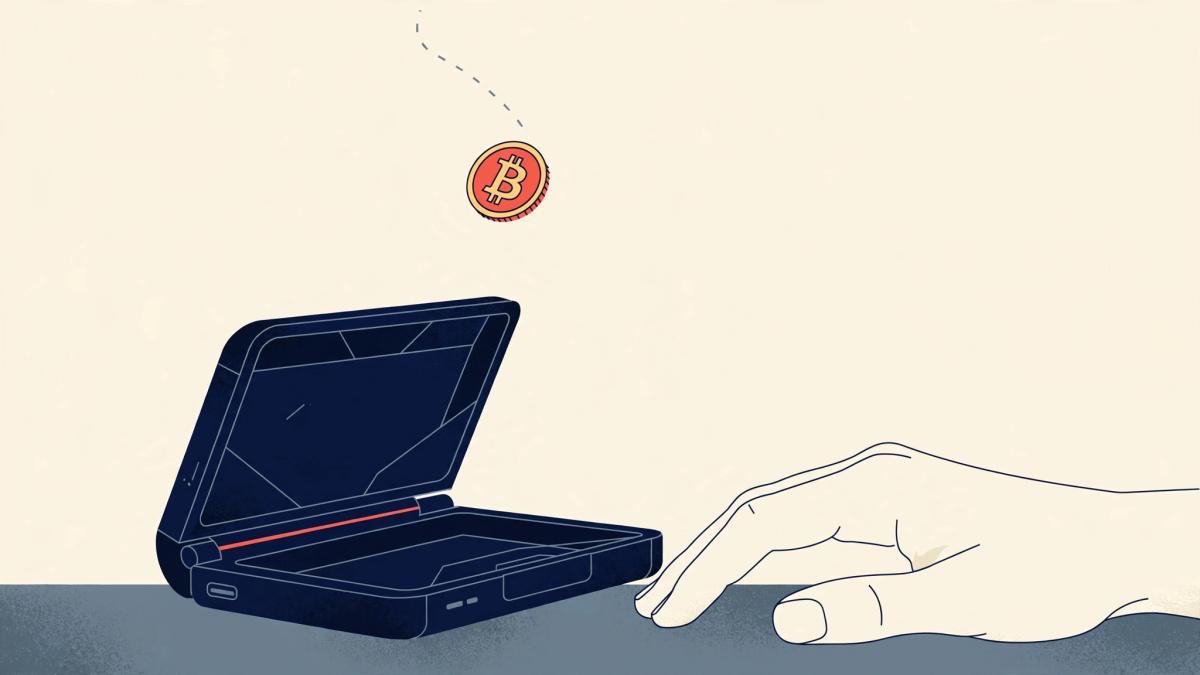
Disclosure: This article is informational coverage of Ledger's May 13, 2026 dusting-attack page and Bitcoin.org's privacy guidance. The illustration is generated artwork, not a photograph of a real wallet or incident. Exact dust cutoffs vary by node policy. This article is not financial, legal, or investment advice. AI-assisted research and writing. Cited sources, not AI alone, support the claims.